NASA-Approved Desk Plants: Clean Air and Focus Boosters
By Priya Menon • 9th Dec
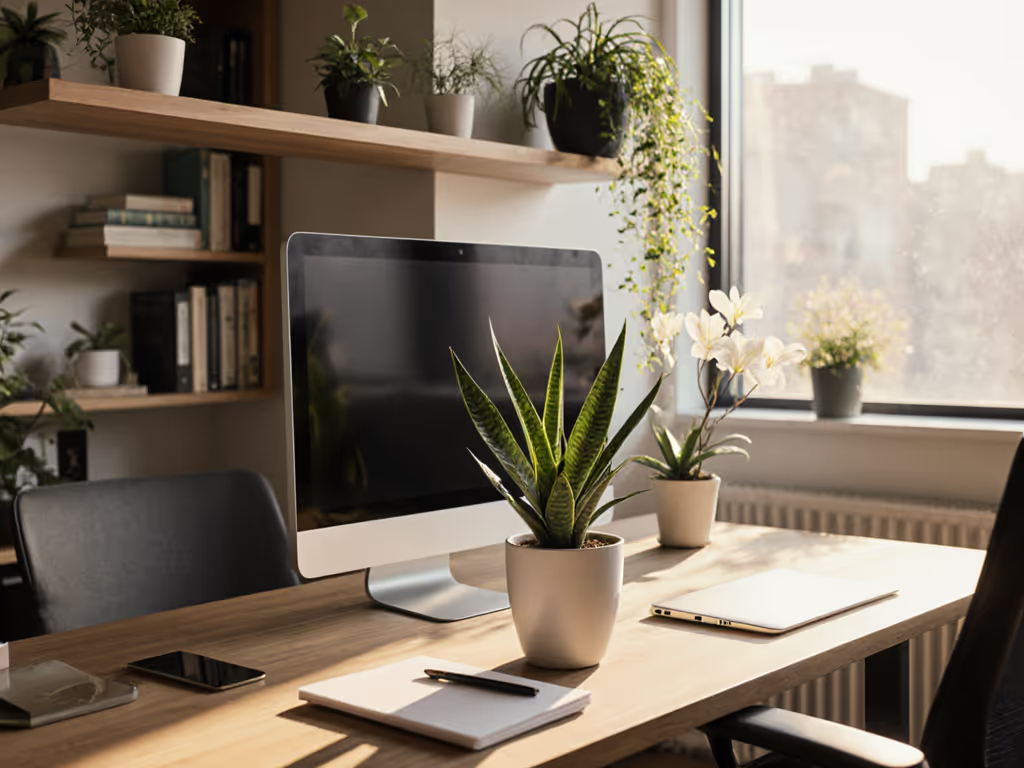
Let's cut through the hype: pairing desk plant productivity with office air quality plants isn't just about pretty greenery. NASA's landmark research identified specific houseplants that may support cleaner air in confined spaces, a critical consideration for your home office where stagnant air and off-gassing electronics compound. But before you impulse-buy a sprawling fern, remember this: your cramped apartment desk has hard limits. For a step-by-step approach, see our fit-first mapping guide. Map your desk before your cart.
As a measurement-focused setup specialist, I've seen too many buyers return wilted plants after realizing their "desk-friendly" snake plant outgrew the monitor gap. Like when I drafted my first fit map for a rental desk, only to discover my dream mic arm needed 2" of overhang I didn't have. That starter map taught me: constraints drive clarity. For desk plants, your space's dimensions and light dictate success more than any "NASA-approved" label. Let's tackle your real questions.
Why does the "NASA clean air study" keep popping up for desk plants?
In 1989, NASA's Biohome study tested plants in sealed chambers (85-gallon tanks) to solve air toxicity in space stations. Researchers like Dr. Bill Wolverton found certain plants absorbed VOCs like formaldehyde through leaves, then routed toxins to roots where soil microbes broke them down into plant nutrients. Key takeaways often misapplied to offices:
- Roots > Leaves: 60-70% of purification happens in the root zone, not foliage. A pot's soil volume matters more than leaf surface.
- Density Required: NASA suggested 1 plant per 100 sq ft, but chambers had near-zero air exchange. Real offices leak air constantly, reducing effectiveness.
- Pollutant Specificity: Snake plants target benzene; peace lilies combat formaldehyde. No single plant neutralizes all toxins.
Reality check: The American Lung Association notes these results "do not translate to real-life settings" due to higher air volumes and airflow in homes. Still, peer-reviewed studies confirm plants do remove trace VOCs, especially in low-ventilation rooms. For your desk, think of them as complementary allies, not standalone air purifiers. To integrate nature beyond a single plant, explore our biophilic desk design guide.
How do I choose a desk plant that actually fits my space?
For renters and space-strapped workers, measurement is non-negotiable. Start with your desk's safe zones:
- Width Check: Measure your desk's usable width (subtract monitor stand/keyboard tray space). Most desks have 12-18" of clear space on one side. Rule: Plant width ≤ 1/3 of that zone. Example: 15" clear space = max 5" pot width.
- Depth Check: Typical desks are 24-30" deep. Subtract your seated monitor distance (20-24"). Rule: Pot depth ≤ 6". Deeper pots crowd mouse/keyboard space.
- Height Check: Ultrawide monitors? Measure from desk to screen top. Rule: Mature plant height ≤ 75% of that gap. Avoid blocking sightlines.
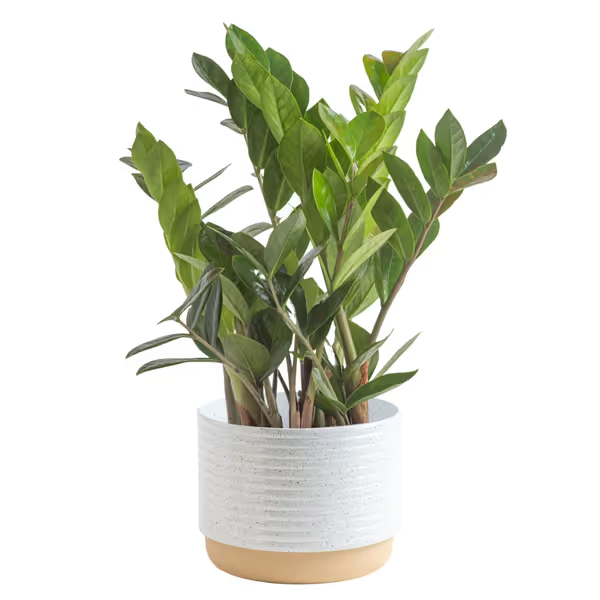
Costa Farms ZZ Plant
Low-maintenance ZZ plant brings tropical flair and purifies air naturally.
$29.66
Height12-Inches Tall
Height12-Inches Tall
Pros
Easy to care for with minimal watering
Enhances mood, creativity, and reduces stress
Cons
Size and leaf greenness can vary
Customers find the ZZ plant beautiful with shiny leaves and appreciate its ease of care, noting it requires little attention and maintenance. Moreover, the plant grows quickly with new shoots and arrives healthy. However, the size and greenness receive mixed feedback - while some find it larger than expected, others say it's smaller than described, and while some appreciate its green color, others report yellowing leaves. The survival rate is also mixed, with some reporting it's thriving while others say it's dying.
Customers find the ZZ plant beautiful with shiny leaves and appreciate its ease of care, noting it requires little attention and maintenance. Moreover, the plant grows quickly with new shoots and arrives healthy. However, the size and greenness receive mixed feedback - while some find it larger than expected, others say it's smaller than described, and while some appreciate its green color, others report yellowing leaves. The survival rate is also mixed, with some reporting it's thriving while others say it's dying.
This is where low-light desk plants shine. They tolerate the dim corners your desk offers (for example, 3-5 ft from a north window). Skip "bright indirect light" plants, they will stretch toward windows, colliding with monitors. Stick to proven performers:
- ZZ Plant: Thrives in near-darkness; grows slowly to 12" tall (ideal for monitor gaps). Upgrade note: Repot into 6" pots max to control spread.
- Snake Plant: Purifies air 24/7 (releases oxygen at night); fits narrow slots (4" pot width).
- Pothos: Trails downward (safe for monitor arms); tolerates fluorescent light.
Map your desk before your cart. A 4" pot in a measured safe zone outperforms a "NASA top pick" crammed beside your laptop.
Can these plants really reduce stress during back-to-back Zoom calls?
Yes, but not just from air purification. Biophilic stress reduction is science-backed: a 2022 University of Melbourne study found workers with visible plants reported 15% lower stress during high-focus tasks. The mechanism? Brief visual contact with greenery resets attention fatigue. Crucially, this requires:
- Line-of-sight placement: Within your peripheral vision (not buried behind monitors).
- Minimal care demands: High-maintenance plants add stress. Opt for "neglect-tolerant" varieties.
- Consistent presence: Dead or drooping plants increase anxiety (per 2020 Journal of Environmental Psychology).
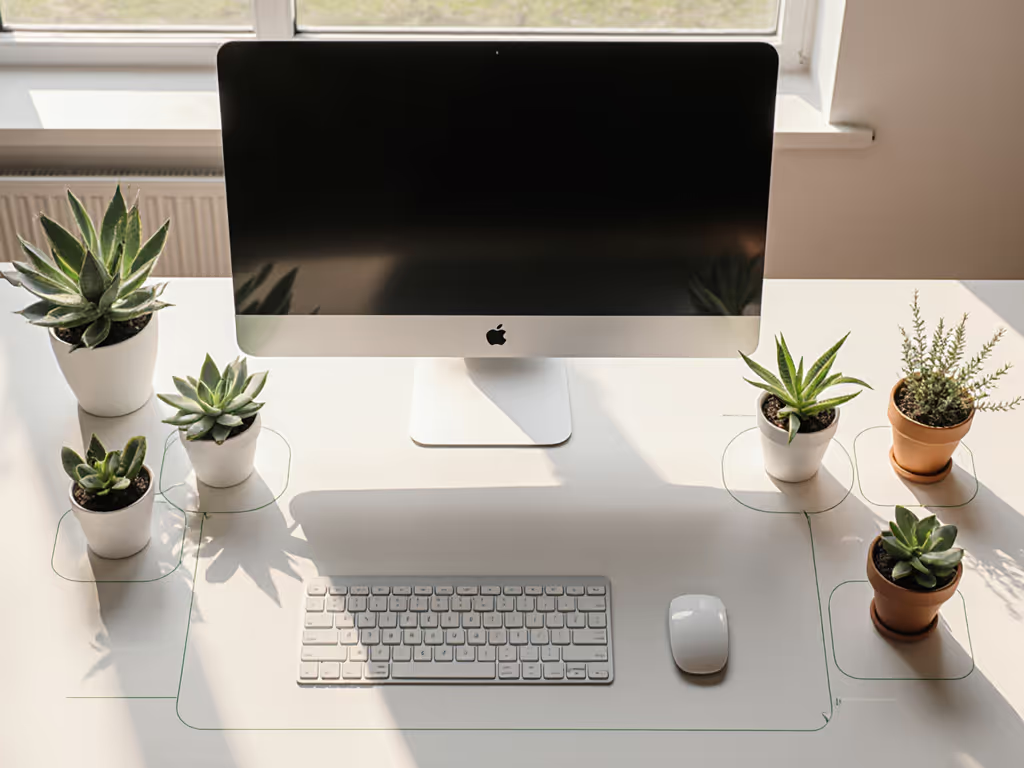
For your workflow, prioritize plant care that aligns with your habits:
| Plant Type | Watering Frequency | Light Requirement | Ideal Desk Spot |
|---|---|---|---|
| ZZ Plant | Every 2-3 weeks | Near-zero light | Monitor side gap (4-6" wide) |
| Snake Plant | Monthly | Any indirect light | Behind keyboard (depth ≤ 5") |
| Pothos | Weekly | Low artificial light | Hanging from shelf above desk |
Pro tip: Use self-watering pots (no drilling needed!) to avoid spill risks on wooden desks. I've seen too many desk disasters from overwatering, a 5 dollar reservoir upgrade prevents returns. For ongoing care and surface protection tips, see our desk maintenance guide.
What's the one thing I should do before buying any desk plant?
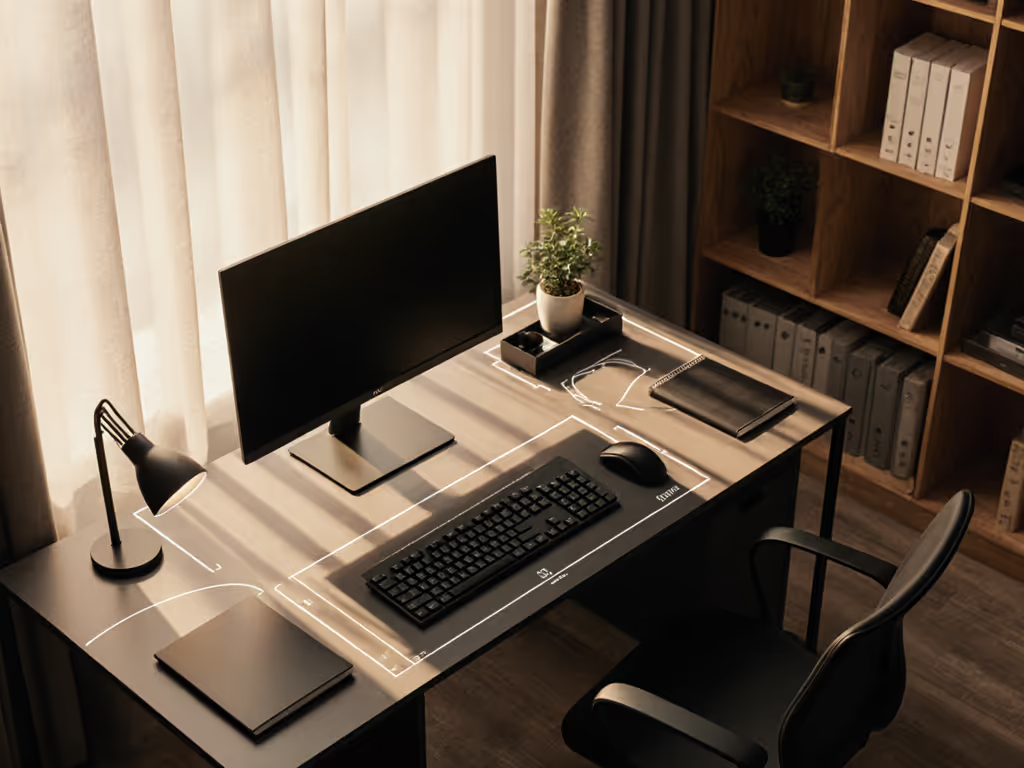
Draft a 30-second fit map:
- Grab a tape measure. Note desk depth and width at your planned plant spot.
- Sketch a 6" x 6" box (max safe footprint). Does it clear monitor arms, drawers, and cable trays?
- Check light: Hold your phone camera (no flash) for 5 sec. If the image is clear, it's sufficient for low-light plants.
Skip this, and you'll battle workflow collisions or dead plants. Do this, and you'll unlock subtle but real benefits: humidified air that reduces dry-eye strain, visual breaks that sustain focus, and a touch of nature that makes your space feel "yours". That is key for renters who can't repaint walls.
NASA's research opened the door, but your desk's constraints define what works. By anchoring choices in plain-language measurements and renter-safe execution, you transform a trendy accessory into a genuine productivity partner. Ready to go deeper? Explore NASA's original study diagrams (search "NASA Clean Air Study Appendix"), then measure your space with the same rigor.
Map your desk before your cart. Your future self will thank you when that ZZ plant quietly thrives in its perfect spot (no returns, no regrets).
Related Articles